Drywood termite spot remediation delivers concentrated eradication force when an infestation remains confined to an identifiable, localized structural zone rather than widespread roof truss webs. In classic bungalow…
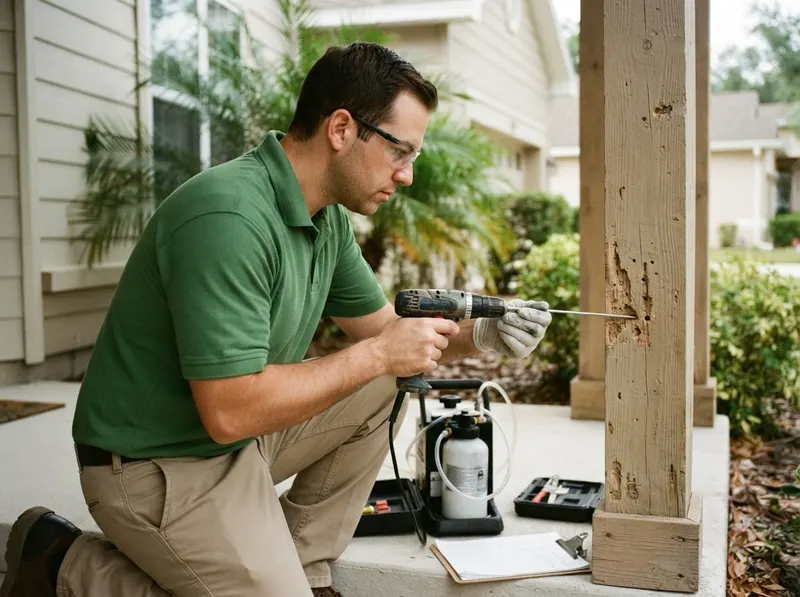
Drywood termite spot remediation delivers concentrated eradication force when an infestation remains confined to an identifiable, localized structural zone rather than widespread roof truss webs. In classic bungalow framing across College Park and Delaney Park, drywood colonies frequently penetrate high-moisture heart pine window sills, door jambs, or fascia boards after late-spring swarming flights. A focused spot application injects a precision non-repellent termiticide directly through minute access holes into the internal galleries where frass pellets accumulate. This localized approach allows occupants to remain inside the residence without packing food, removing plants, or arranging multi-day lodging, providing a decisive defense against active wood excavation.
Selecting spot remediation over full-structure sulfuryl fluoride fumigation depends entirely on colony confinement and structural access. When structural timber exposure reveals frass kick-out holes limited to an exterior entry door, exposed fascia, or a specific attic rafter in neighborhoods like Baldwin Park or Audubon Park, precision drill-and-inject methods eradicate the active colony at the point of damage. However, when multiple colonies inhabit inaccessible interior framing, two-story wall cavities, or multiple roof planes across large modern builds in Lake Nona or Dr. Phillips, spot treatment leaves hidden sub-colonies unchecked. Spot remediation carries an intentional operational trade-off: it preserves daily routine, interior contents, and finishes, but requires accessible structural wood margins to guarantee delivery of the active ingredient into the queen's feeding corridor.
Field execution follows an exacting structural sequence. Technicians first trace the perimeter using thermal detection and physical probing to map timber voids and verify that the insects are drywood termites rather than subterranean species requiring ground barriers. Small, non-structural ports measure 1/8-inch in diameter along the gallery plane. Precision pressure nozzles inject targeted non-repellent foam or specialized borate solutions that travel the entire length of the excavated chambers. The active ingredient bonds to the internal timber fibers, spreading mechanically through grooming behavior to eliminate active workers and soldiers within 24 to 72 hours. Non-contract single treatments solve current infestations directly without locking homeowners into mandatory annual recurring service plans.
Every job gets a firm, written price after a free on-site visit.
Tell us about your drywood termite spot remediation job in Orlando and we'll send a clear, written quote, usually the same day.
 PestPatrol Pro